
Lessons From the Flood
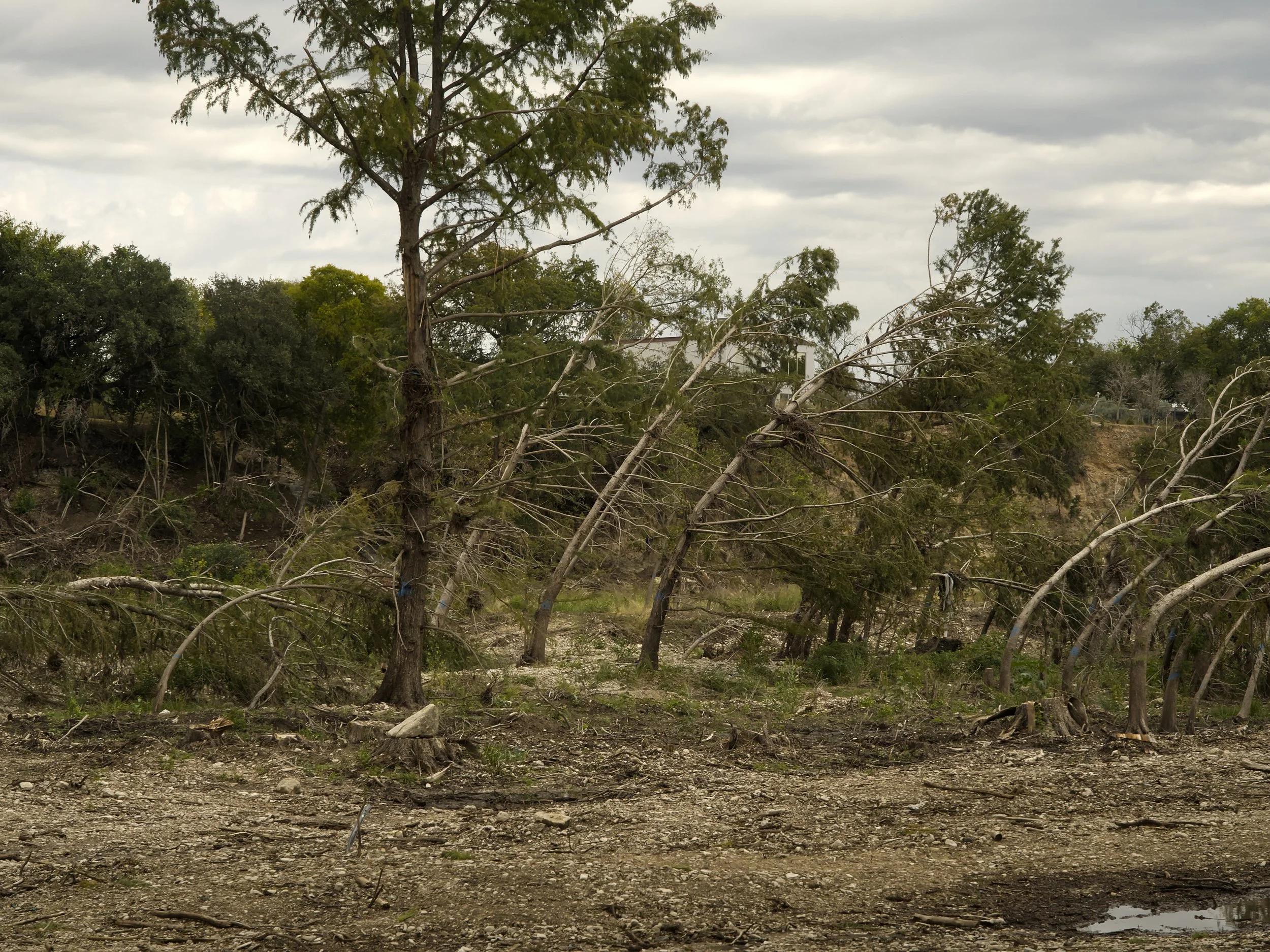
On the morning of July 4th, most people awoke to news of a large flash flood in the Texas Hill Country. Many would go about their normal 4th of July festivities while occasionally seeing updates of what was unfolding. For those with connections to Kerr County, they woke up to fear.
Bubba Garret, a local EMT, said, “I woke up around 2:30 or 3, which is normal for me. Chatter on the radio was pretty normal. At around 4 AM, that chatter turned into chaos. You couldn’t follow the conversation at all.”
“The camp I saw on the morning of July 4th was unrecognizable. I remember seeing the river swallow the canoes we used the day before and watching blue and red mystic shorts float down alongside all the debris from our cabins,” said Camp Mystic counselor, Maya Komanetsky.
According to Charlie Hastings, the Kerr County Engineer and Floodplain Administrator, “At 3 AM it went from 254 gallons per second, no big deal still. 30 minutes later it was 125 thousand gallons per second. Way, way, way, way above the 100-year (floodplain), and way above the 500-year (floodplain).”
By Braden Cummings
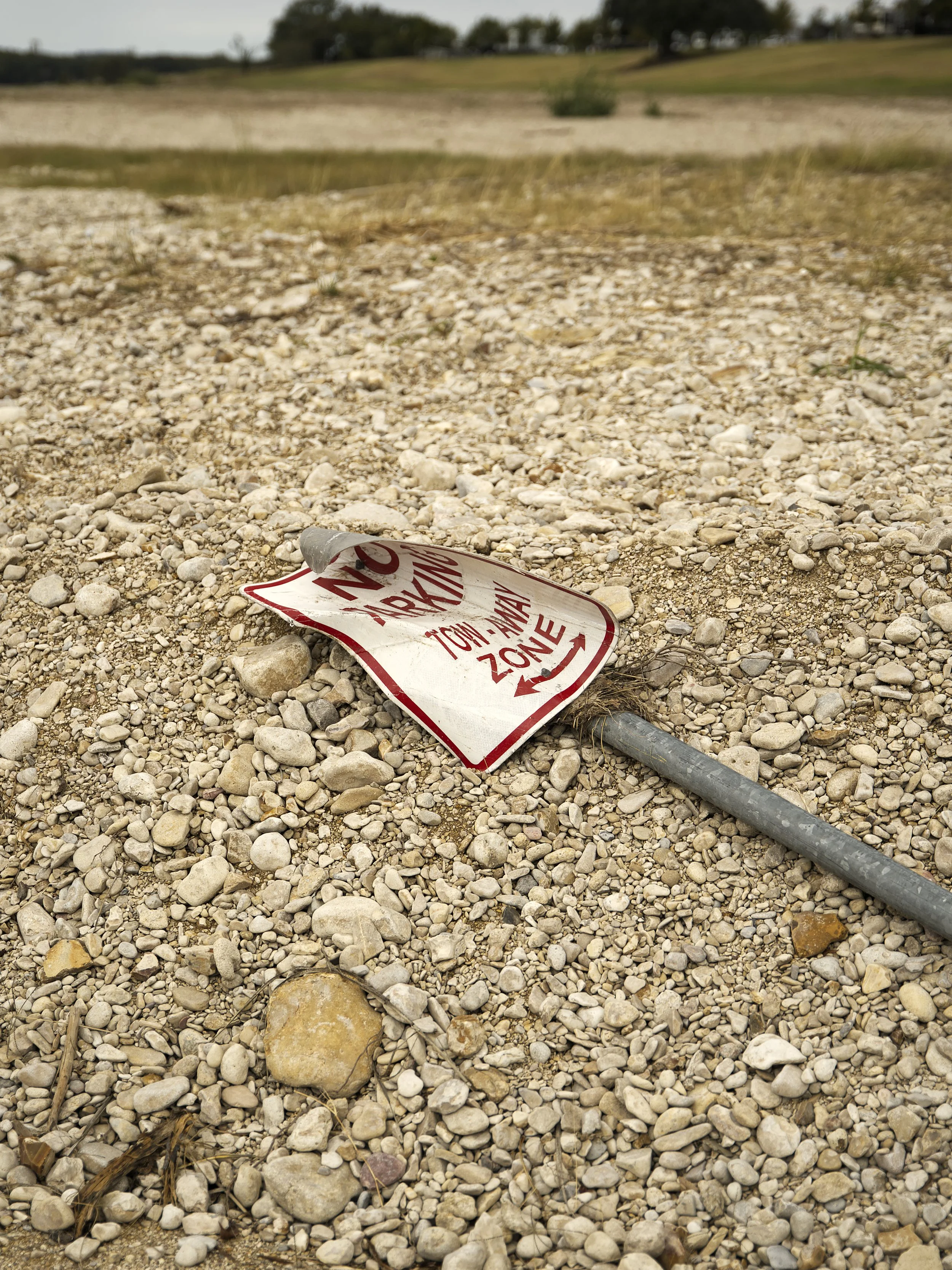
In a podcast that aired after the flood, Bryan Hummel, a former Water Program Manager for the US Air Force who worked in watershed protection for the US Environmental Protection Agency, proposed a unique plan for future flood mitigation that may seem counterintuitive.
Instead of finding ways to get the water out of our area as quickly as possible, Hummel wants us to find ways to slow it down and hold it as long as we can.
Hummel discussed how large-scale grazing, over-hunting, and a booming forestry industry brought by colonization impacted the ecosystem.
In the podcast, Hummel said, “They (the settlers) saw all the grass here and thought they could graze forever, and they tried. What ended up happening is they ate all the grass, and then we didn’t get rain for a long time, and there were no roots to hold the soil in place, and it all washed away.”
The lack of soil, Hummel says, “has created a system where we are inviting water to move off of our landscapes instead of soaking into our landscapes and that leads to flooding.”
To solve this problem, Hummel suggests implementing biomimicry. “If you go back to pre-Columbus, our uplands were managed by large herds of Bison,” Hummel said. These bison helped create a soil that could soak up 8 to 12 inches of rain per hour, and once the soil was saturated, the runoff would be met with beaver dams.
“We used to have as many beavers as the United States has people now,” Hummel stated.
This soaking and slowing of water would have a large impact on reducing flooding. Hummel is now heading up efforts to mimic these effects that animals used to have by terracing hillsides to slow water velocity off normally steep slopes, as well as using large amounts of mulch to add organic matter back on top of the rocks and aid in soaking water.
In 2024, Kerr County implemented a new hazard mitigation action plan that covered a number of natural disasters from earthquakes and wildfires to winter storms and, of course, floods.
When looking at the flood section, something that stands out is that all the efforts are focused on making sure infrastructure like bridges and power lines can withstand the flood, but when it comes to dealing with the flood waters themselves, the only solution is improving drainage to get water away as quickly as possible.
According to the document from Kerr County, “This action proposes constructing new storm drainage infrastructure to reduce the potential impacts of future flood events.” This looks like county efforts to remove debris from the river and drainages that exist, and encourage residents to regularly clear ditches and drains near their homes.
Houston took a similar approach following the flooding caused by Hurricane Harvey in 2017 by investing heavily in creating concrete channels and holding areas to get flood waters away from homes and businesses.
The problem with these plans is what happens when all the drainage reaches its drain point at the same time. This is the recipe for a flash flood. Because concrete is not absorbent, and the water is not allowed to sit in an absorbent area for any amount of time, the amount of water that needs to be handled drastically increases.
Natural Hazards Review said, “While channelization has been a common flood mitigation practice, recent studies have found that it is responsible for an increase in flood frequency and magnitude.”
Hastings shared his thoughts on Hummel’s plan after listening to the podcast;
“Out here in the Hill Country, we have steep terrain, so that would be a tough task. It would be interesting to see if you picked strategic locations and focused on those, what kind of an impact you could have on a flood of that magnitude. But when you get a storm this big, it doesn’t take long to saturate the ground, and from that point on, every drop is going to the river. For a storm this big, it makes its own drainage path.”
While it seems these two views are somewhat at odds with each other, perhaps they’re not. Perhaps they are both right when you meld them together. Perhaps, this magnitude of a flood is part of what used to happen in the landscape, albeit infrequently, and we just don’t know it because there aren’t records of it.
“I guarantee you that it’s happened in the past. I don’t think anyone will argue that. I don’t know how far back you have to go, but there probably isn’t any record because there wasn’t anybody there to care to,” Hastings said.
According to Hastings, “The landscape completely changed. I think it’s gonna be more beautiful than before. I know a lot of people don’t feel that way, but that section of river hasn’t had a big enough storm to clean it the way it's been cleaned.”
Going forward, it seems part of the flood mitigation effort is simply respecting that this level of flood can happen again and that it can be good for the landscape to go through this kind of cleansing.
Fear, one of the strongest emotions that can drive people to rash actions and poor decisions. Fear is what struck many people on July 4th, and it’s fear that can create even more damage in the aftermath.
If we hyperfocus on our fear of water to the point where the only solution we see is getting it as far away as fast as possible. And while there are few mitigation efforts that can be effective against the storm Kerr County saw that day, maybe it’s time to overcome our fear and hold the water as close and for as long as possible, healing our land and protecting our current communities, as well as generations downstream of us.
At this point, a vast majority of the debris has been cleaned from the river.
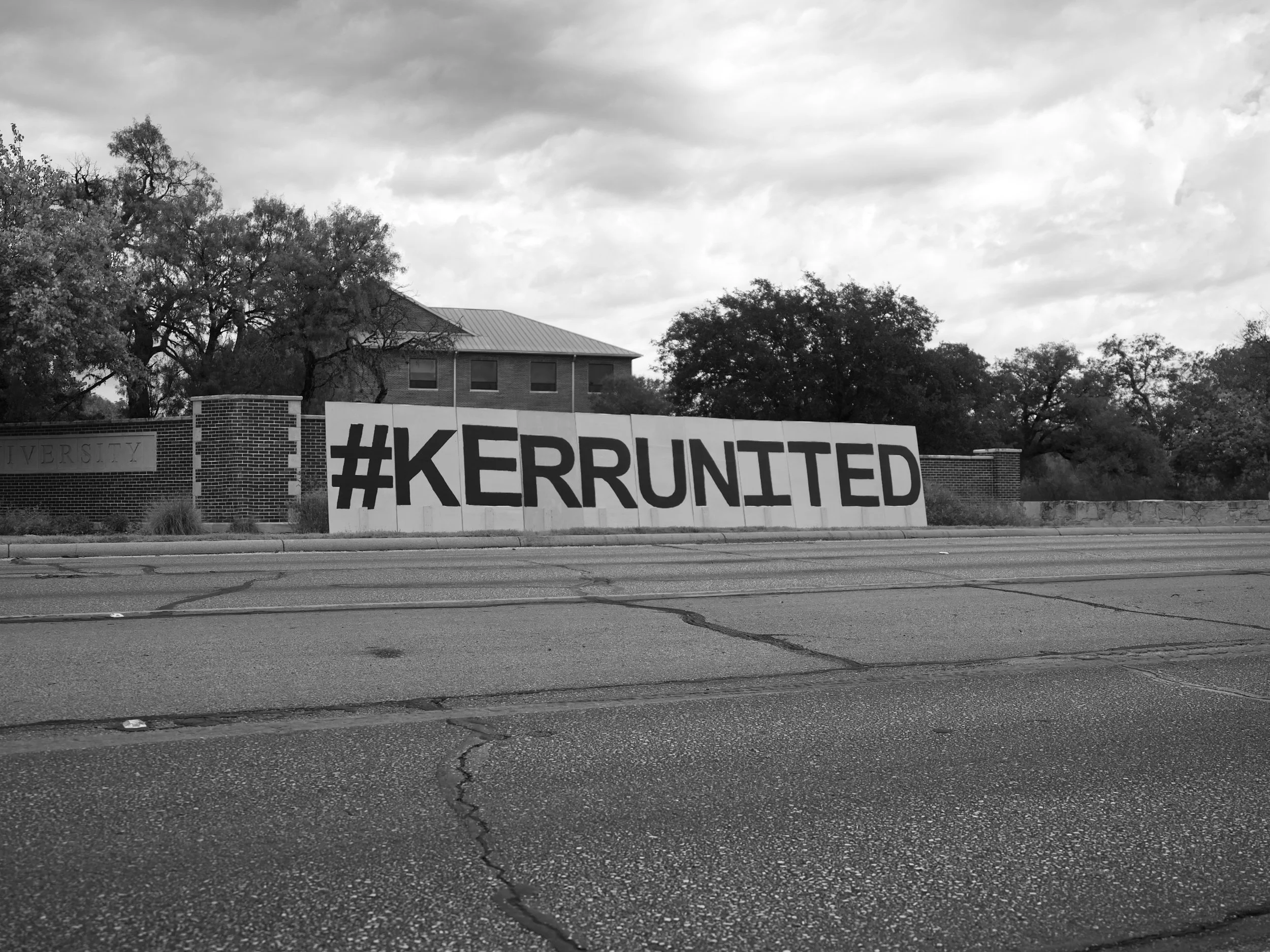
There are currently groups lobbying for mulch created from the cleanup process to be left in or near the riverbed to add organic material back to the landscape. Because most of the riverbank is privately owned, this is primarily a door-to-door campaign.
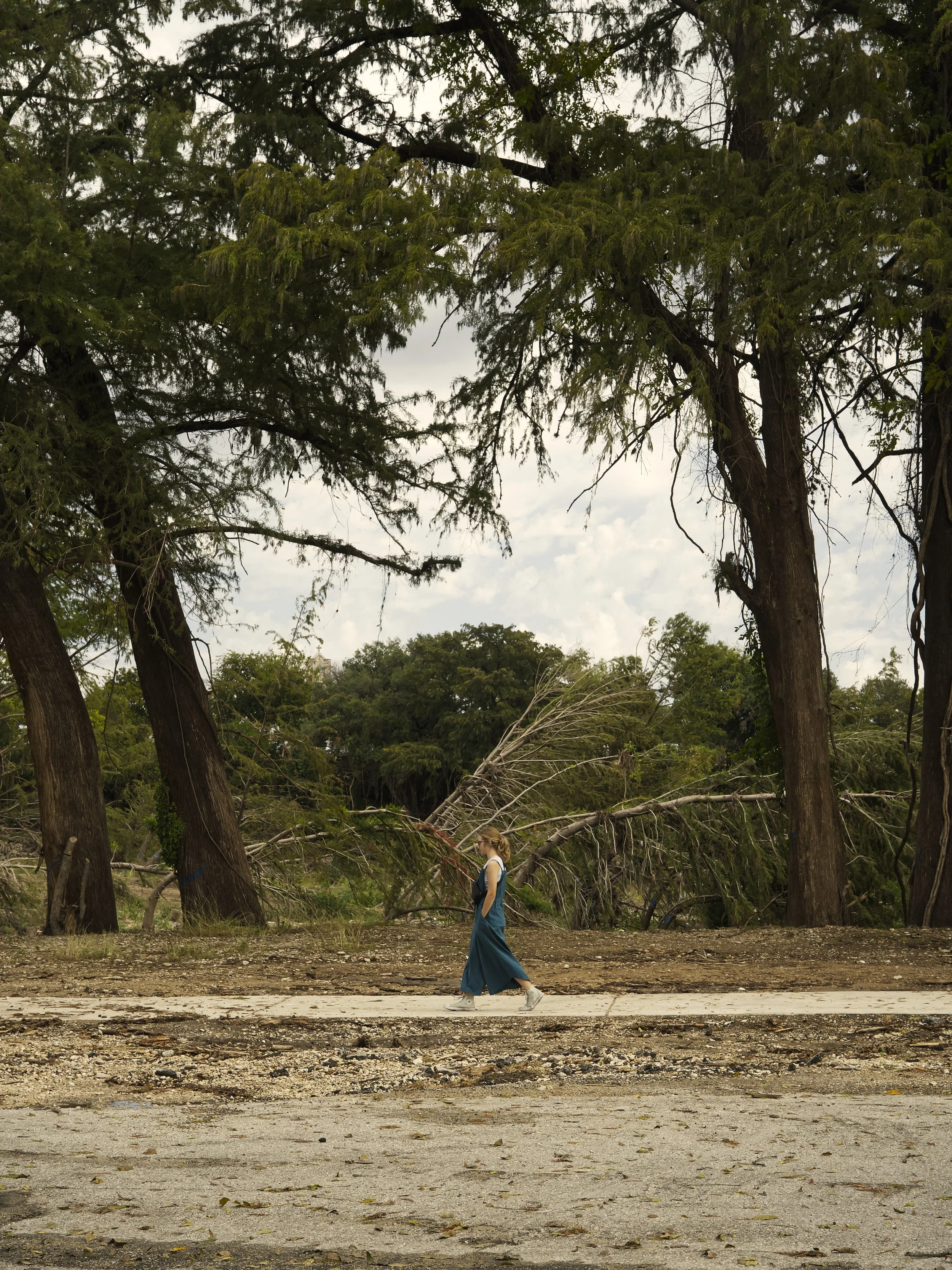
Most locals have returned to normalcy. Louis Hays Park, which was completely underwater, has gone back to being a common gathering place for those wanting to enjoy the beauty of the river, and the walking trails are back in use, being shaded by the cypress that withstood the floodwaters.